Coconut shell or coal: two materials with different pores. Here is what the studies say and which works best with...

Latest posts
-
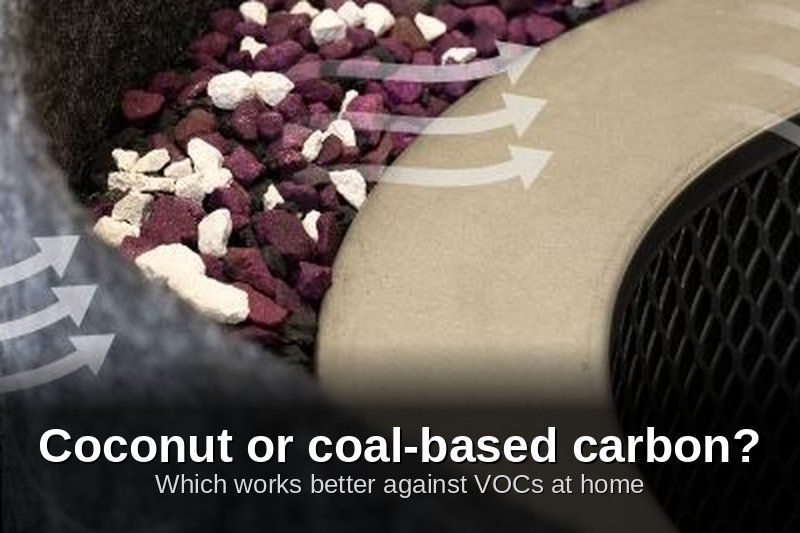 Coconut or coal-based carbon: which is better for VOCsRead more: Coconut or coal-based carbon: which is better for VOCs
-
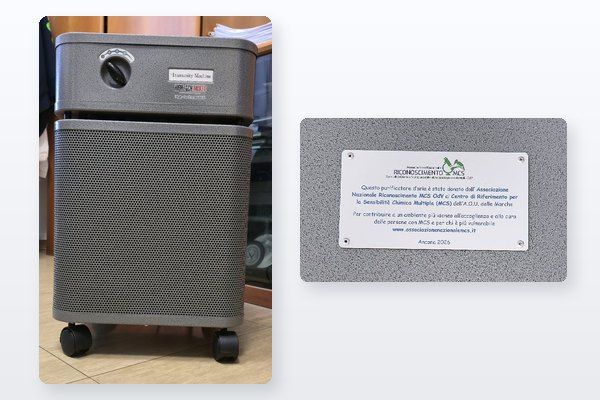 An air purifier donated to the MCS Reference Center in Ancona: a project made possible by the 5x1000Read more: An air purifier donated to the MCS Reference Center in Ancona: a project made possible by the 5x1000
The National Association for the Recognition of MCS donated an Austin Air Immunity Machine® air purifier to the MCS...
-
 Dog and cat odors at home: how to get rid of litter box ammonia tooRead more: Dog and cat odors at home: how to get rid of litter box ammonia too
The ammonia smell of the litter box, a wet dog's coat, hair and allergens everywhere: anyone living with dogs and...
-
 Saharan dust and Etna ash: what they are and how to protect the air at homeRead more: Saharan dust and Etna ash: what they are and how to protect the air at home
Yellow skies from African dust and falls of Etna ash: two increasingly frequent natural phenomena that bring fine...
-
 Floods and indoor air: what happens afterwards and how to protect yourselfRead more: Floods and indoor air: what happens afterwards and how to protect yourself
After a flood, the air problem does not end when the water recedes: mold, bacteria, dust and odors can linger at home...
-
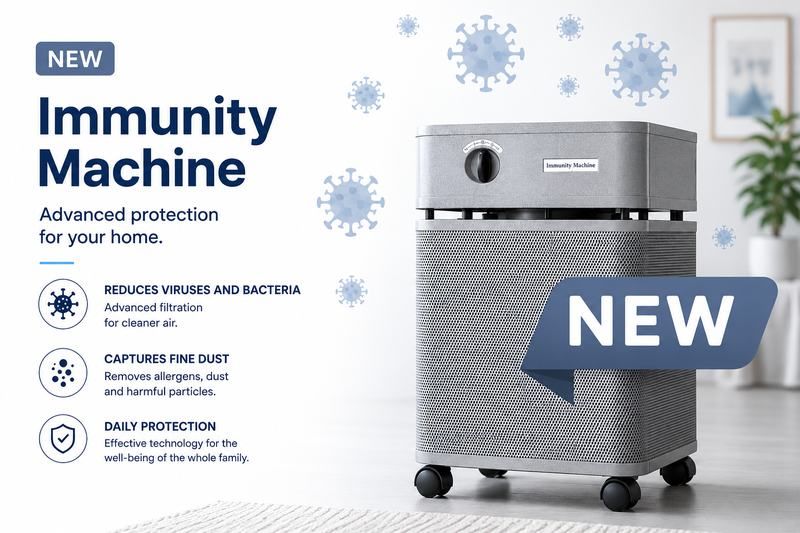 Austin Air announces the launch of the Immunity Machine, its most advanced air purifier.Read more: Austin Air announces the launch of the Immunity Machine, its most advanced air purifier.
Austin Air introduces the Immunity Machine, its most advanced air purifier: 8-phase filtration with medical-grade...
-
 MCS and Air Purification: A Guide to More Livable SpacesRead more: MCS and Air Purification: A Guide to More Livable Spaces
A practical guide to air purification for people with MCS and chemical sensitivity: how to choose the right purifier,...
-
 Air Purifiers: Complete Guide and How to Choose the Right OneRead more: Air Purifiers: Complete Guide and How to Choose the Right One
How to choose the right air purifier: HEPA and carbon filters, sizing, noise, running costs and maintenance....
-
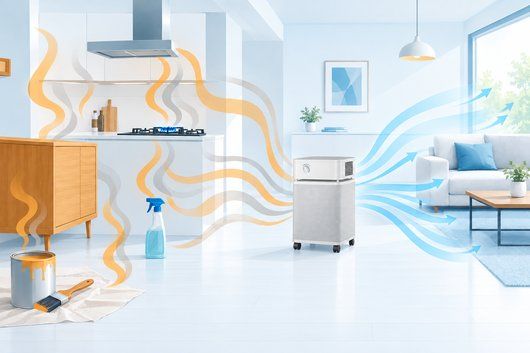 VOCs at home: what they are, where they hide and how to really remove themRead more: VOCs at home: what they are, where they hide and how to really remove them
Paint, new furniture, cleaning products and gas stoves release VOCs that no HEPA filter can stop. Discover where they...
-
 Extreme heat and air quality: what changes and how to protect yourselfRead more: Extreme heat and air quality: what changes and how to protect yourself
Extreme heat worsens the air quality we breathe, affecting everyone and especially people with MCS. Causes, updated...
Blog categories
Search in blog
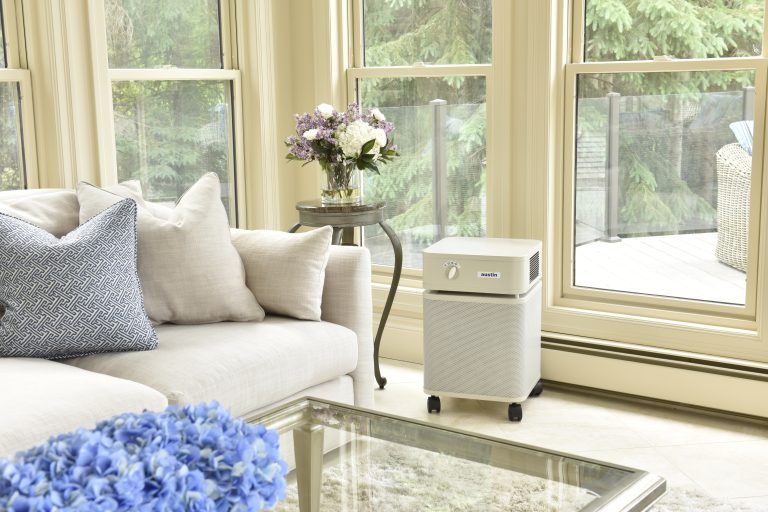
How to Choose the Right Austin Air Purifier for You
Choosing an air purifier looks simple, until you face a range of models that look alike but do very different things, and the question is always the same: which one is right for me? The truth is there is no single best air purifier, there is the right one for your need. A model that is excellent against pollen and dust may not be the ideal choice if your problem is chemical odors or the formaldehyde of a freshly renovated home.
In this guide we look, need by need, at how to navigate the Austin Air range, which criteria really matter and which mistakes to avoid. If you want to go straight to the result, you can use our guided buying path, which takes you to the right model in a few clicks. If instead you want to understand the reason behind each choice, read on.
First: how to reason about it
Choosing a purifier comes down to three questions, not just one. The first is what you want to remove from the air: if the enemy is particles like pollen, dust mites and dust, the core is the HEPA filter; if instead it is gases, odors and volatile organic compounds (VOCs), what matters is the chemical section of the filter, that is the amount of activated carbon and the presence of impregnated carbon. The second question is how large the space is: an undersized model always runs at maximum without ever really cleaning the room. The third is your specific situation: a new home, the presence of vulnerable people, pets, smoke, all change the ideal model.
A warning about a very common mistake: relying only on the CADR value printed on the box. As we explained in the article on why CADR is not a reliable standard, that number tells only part of the story and can lead to the wrong choice.
The most common needs, and the right model for each


Do not forget the size of the space
Even the right model does little if it is undersized for the room. Real-world coverage, with a good number of air changes per hour, is about 80 m² for standard models and about 40 m² for Junior models. Be wary of much higher coverage figures claimed by some manufacturers: they are theoretical maximums calculated with very few air changes, of little practical use. For large rooms or where more frequent air changes are needed, it is better to consider two units rather than a single overloaded one.
Five mistakes to avoid
Looking only at price. A cheap purifier with thin filters needs frequent replacement and filters gases poorly: over time it costs more and protects less than a model with a multi-year filter.
Ignoring the chemical part. Many purifiers have a good HEPA but very little activated carbon: great on dust, almost useless on odors, smoke and VOCs. If your problem is gases, the amount of carbon matters as much as the HEPA.
Getting the size wrong. A model too small for the room always runs at maximum without ever really cleaning the air. Better an adequate model, or two units for large spaces.
Trusting ozone or ionization purifiers. They promise a lot but can generate irritating by-products, not recommended especially for sensitive people, asthmatics and MCS patients. Purely mechanical filtration is safer.
Forgetting maintenance. Even the best filter needs pre-filter cleaning and end-of-life replacement. A good purifier performs well when maintained, poorly when neglected.
Why Austin Air, regardless of the model
All models share the same philosophy: purely mechanical and adsorption filtration, without ozone or ionization, with a long-life filter (up to 5 years), a steel body and 360° air intake. In standard and Junior models the air passes slowly through the layer of coconut shell activated carbon, rich in micropores, that surrounds the HEPA, with a longer contact time that favours the adsorption of gases, odors and VOCs. This is not marketing: it is an approach documented by independent clinical studies, as we describe in why Austin Air air purifiers are the best. This means that whatever model you choose for your need, the technological base is the same, and it is a high one.
Want the answer in a few clicks?
Our guided path takes you to the right Austin Air purifier for you, with a full model comparison.
Go to the buying guideIf you still have doubts, we are here to help with no obligation: message us on WhatsApp or through the contact page and we will help you choose the model best suited to your case.
Note: claims refer to independent studies and/or laboratory tests conducted primarily in the United States on specific populations and conditions. Performance may vary depending on usage conditions and maintenance. Air purifiers are not medical devices and do not replace recommended preventive measures, diagnoses, or therapies.
Posted in:
Air Quality Blog
Related posts
-
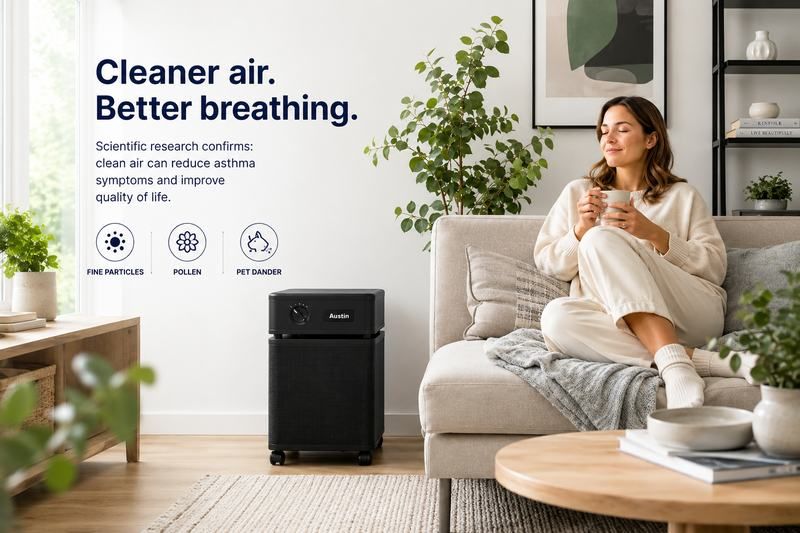 Asthma and Indoor Air Quality: What Science Says and How to Protect Yourself
Asthma affects over 3 million people in Italy and often worsens at night, when exposure to bedroom allergens is...Read more
-
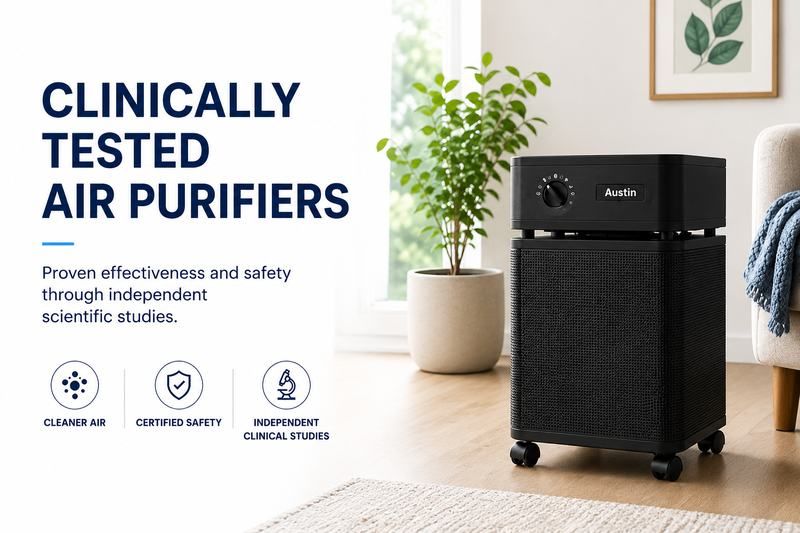 Ten independent clinical trials on Austin Air: what they show
Eight published studies and two in progress, conducted by eight independent research institutions on asthma,...Read more
-
Air Purifiers: Complete Guide and How to Choose the Right One
How to choose the right air purifier: HEPA and carbon filters, sizing, noise, running costs and maintenance....Read more
-
Austin Air announces the launch of the Immunity Machine, its most advanced air purifier.
Austin Air introduces the Immunity Machine, its most advanced air purifier: 8-phase filtration with medical-grade...Read more
-
MCS and Air Purification: A Guide to More Livable Spaces
A practical guide to air purification for people with MCS and chemical sensitivity: how to choose the right purifier,...Read more
Leave a comment