Coconut shell or coal: two materials with different pores. Here is what the studies say and which works best with...

Latest posts
-
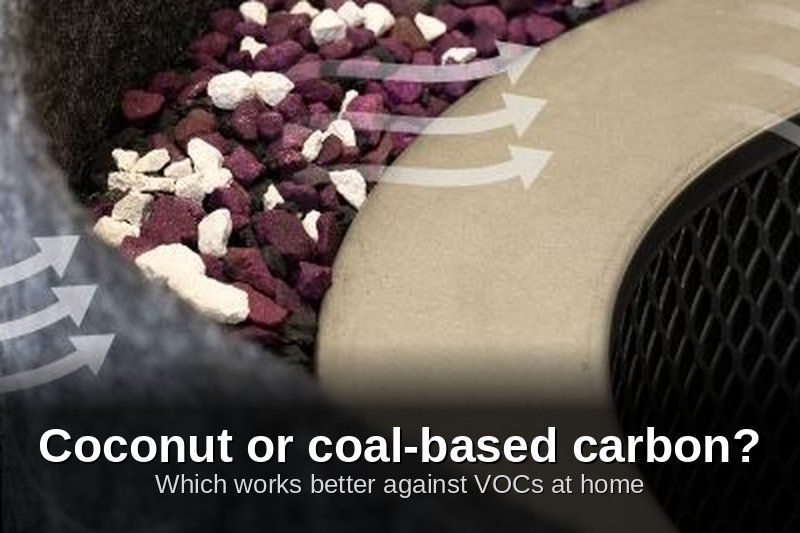 Coconut or coal-based carbon: which is better for VOCsRead more: Coconut or coal-based carbon: which is better for VOCs
-
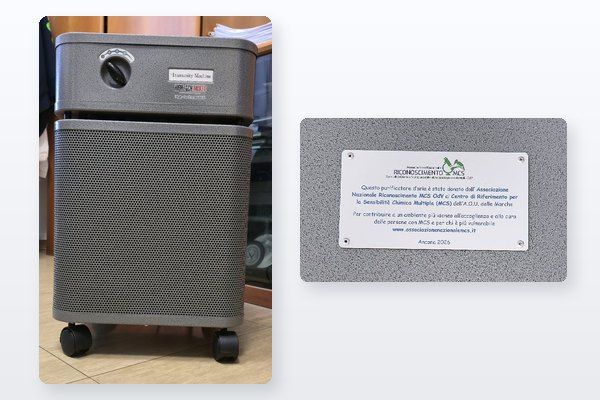 An air purifier donated to the MCS Reference Center in Ancona: a project made possible by the 5x1000Read more: An air purifier donated to the MCS Reference Center in Ancona: a project made possible by the 5x1000
The National Association for the Recognition of MCS donated an Austin Air Immunity Machine® air purifier to the MCS...
-
 Dog and cat odors at home: how to get rid of litter box ammonia tooRead more: Dog and cat odors at home: how to get rid of litter box ammonia too
The ammonia smell of the litter box, a wet dog's coat, hair and allergens everywhere: anyone living with dogs and...
-
 Saharan dust and Etna ash: what they are and how to protect the air at homeRead more: Saharan dust and Etna ash: what they are and how to protect the air at home
Yellow skies from African dust and falls of Etna ash: two increasingly frequent natural phenomena that bring fine...
-
 Floods and indoor air: what happens afterwards and how to protect yourselfRead more: Floods and indoor air: what happens afterwards and how to protect yourself
After a flood, the air problem does not end when the water recedes: mold, bacteria, dust and odors can linger at home...
-
 Austin Air announces the launch of the Immunity Machine, its most advanced air purifier.Read more: Austin Air announces the launch of the Immunity Machine, its most advanced air purifier.
Austin Air introduces the Immunity Machine, its most advanced air purifier: 8-phase filtration with medical-grade...
-
 MCS and Air Purification: A Guide to More Livable SpacesRead more: MCS and Air Purification: A Guide to More Livable Spaces
A practical guide to air purification for people with MCS and chemical sensitivity: how to choose the right purifier,...
-
 Air Purifiers: Complete Guide and How to Choose the Right OneRead more: Air Purifiers: Complete Guide and How to Choose the Right One
How to choose the right air purifier: HEPA and carbon filters, sizing, noise, running costs and maintenance....
-
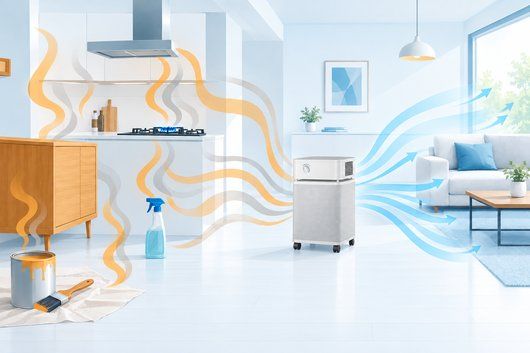 VOCs at home: what they are, where they hide and how to really remove themRead more: VOCs at home: what they are, where they hide and how to really remove them
Paint, new furniture, cleaning products and gas stoves release VOCs that no HEPA filter can stop. Discover where they...
-
 Extreme heat and air quality: what changes and how to protect yourselfRead more: Extreme heat and air quality: what changes and how to protect yourself
Extreme heat worsens the air quality we breathe, affecting everyone and especially people with MCS. Causes, updated...
Blog categories
Search in blog
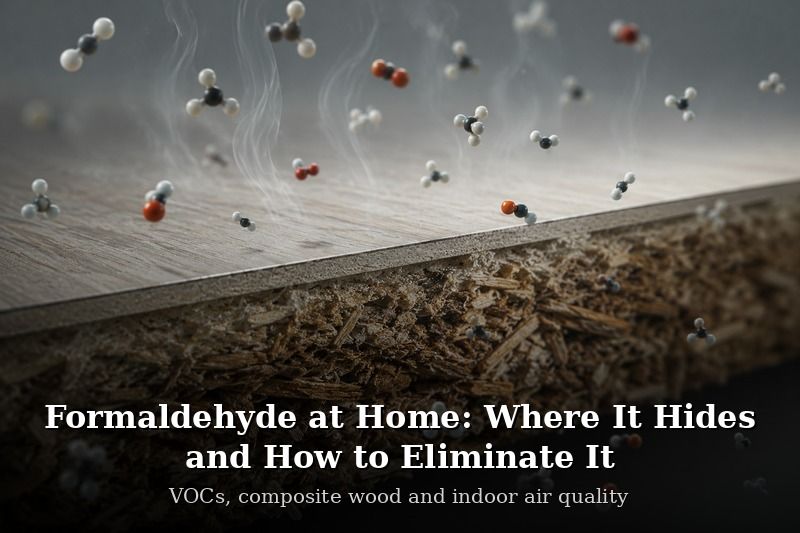
Formaldehyde at Home: Where It Hides, What It Does to Your Health and How to Eliminate It
Formaldehyde is a Group 1 carcinogen present in almost every home: where it comes from, what it does and how to reduce it. And why a HEPA filter alone cannot capture it.
Reading: ~8 min
What formaldehyde is and why it is dangerous
Formaldehyde (HCHO) is a volatile organic compound (VOC), colourless and with a pungent odour at high concentrations. It is classified by the International Agency for Research on Cancer (IARC) as a Group 1 carcinogen, that is, a substance for which there is sufficient evidence of carcinogenicity in humans.
Despite its dangers, formaldehyde is present in almost every modern home. It does not come from outside: we produce it ourselves, with the materials we choose to furnish, build and clean our homes.
The problem is that at low concentrations it is odourless and invisible. We do not see it, we do not smell it, but we breathe it in continuously, especially in poorly ventilated spaces.
What does formaldehyde smell like?
At high concentrations it has a pungent, irritating odour, similar to what you notice walking into a furniture showroom or a newly furnished room. At low concentrations, however, it is odourless: and that is exactly what makes it insidious, because you keep breathing it in without realising.
Where formaldehyde is found at home
The sources of formaldehyde in the home are many and often unsuspected:
Furniture and composite wood panels
Chipboard, MDF and plywood use urea resins that contain formaldehyde and release it slowly for years (off-gassing). New, cheap furniture is among the main sources, especially in the first months and in warm, humid conditions.
Laminate flooring and pre-finished parquet
Many laminates contain adhesives and coatings that release formaldehyde. In 2015 a large US retailer withdrew laminate flooring from the market with levels well above safety limits.
Paints, lacquers and finishes
Many wall paints, furniture lacquers and floor finishes contain or release formaldehyde as they dry. Freshly painted rooms can have high concentrations for weeks.
Glues, adhesives, kitchens and building materials
Glues and adhesives, kitchen cabinets and units, insulation and other building materials can contain formaldehyde. According to Austin Air, some everyday products, such as fabric softeners and detergents, can also release it.
Cleaning products and detergents
Some floor cleaners, stain removers, polishes and air fresheners contain formaldehyde or substances that release it (so-called formaldehyde releasers).
Treated textiles
Curtains, mattress covers, bed linen and clothes treated to be wrinkle-resistant can contain formaldehyde-based resins. Always wash new textiles before first use, preferably twice: it removes much of the resin.
Cigarettes and combustion
Cigarette smoke is a significant source of formaldehyde. Burning candles, incense and fireplaces also produces it as a by-product.
Cosmetics and hair products
Some hair-straightening treatments (so-called "Brazilian keratin"), nail polishes and cosmetic preservatives contain formaldehyde or substances that release it on contact with air.
Health effects: what formaldehyde causes
The effects depend on the concentration and the duration of exposure.
The WHO recommends not exceeding 0.1 mg/m³ (100 µg/m³) over any 30-minute period. This short-term value also protects against long-term effects, including cancer.
Short-term effects (acute exposure)
- Irritation of the eyes, nose and throat
- Watering eyes and a burning sensation
- Coughing, wheezing
- Headache and nausea
- Skin irritation and contact dermatitis
Long-term effects (chronic exposure)
- Chemical sensitisation: in some people, prolonged exposure may be associated with a growing sensitivity to formaldehyde and other VOCs, an aspect also discussed in relation to Multiple Chemical Sensitivity (MCS)
- Chronic respiratory conditions: asthma, chronic bronchitis, COPD
- Nasopharyngeal cancer and leukaemia: IARC classified formaldehyde as a Group 1 carcinogen on the basis of evidence of nasopharyngeal cancer in occupationally exposed workers
The most vulnerable groups are children (who breathe more air relative to body weight), the elderly, people with asthma or allergies and those with MCS.
How to reduce formaldehyde at home: practical measures
Eliminating it completely is impossible, but there are concrete measures to reduce its concentration:
- Choose E0 or E1 certified furniture: European regulations classify wood panels by their formaldehyde emissions. E0 products have very low emissions.
- Ventilate often: ventilation is the most immediate way to dilute formaldehyde. Open the windows for at least 15-20 minutes a day, especially in rooms with new furniture.
- Avoid heat exposure: heat accelerates release from materials. Avoid overheating rooms with new furniture.
- Choose formaldehyde-free cleaning products: read the labels and avoid formaldehyde releasers (DMDM hydantoin, quaternium-15, imidazolidinyl urea).
- Active air purification: the most effective measure to continuously reduce concentrations in the air.
Why you need activated carbon and zeolite (and why not all of them work)
Formaldehyde is a gaseous molecule. This means that a HEPA filter, however effective on particles, cannot capture it: formaldehyde passes through the HEPA without being intercepted.
To capture it you need activated carbon, which works by adsorption: the gaseous molecules bind to the porous surface of the carbon and are removed from the air. But the quantity makes all the difference:
- A filter with a few hundred grams of carbon, as in many common purifiers, saturates much sooner when there is a continuous formaldehyde source
- A filter with kilograms of activated carbon, such as the up to 6.8 kg in standard Austin Air models, offers a much higher adsorption capacity and a much longer life
The type of carbon and the way air passes through it matter too. In Austin Air purifiers the activated carbon is coconut shell carbon, rich in micropores, well suited to trapping VOCs at the low concentrations typical of indoor air. Thanks to the 360° intake, air passes slowly through the layer of carbon surrounding the HEPA, with a longer contact time that favours adsorption.
Moreover, for formaldehyde ordinary activated carbon has limited efficiency. That is why Austin Air also uses potassium iodide-impregnated carbon, which according to the manufacturer is more effective on formaldehyde and other harsh chemical gases.
 The solution: Austin Air HealthMate Plus® and Immunity Machine®


Austin Air offers two models particularly suited to those with high needs for reducing VOCs and formaldehyde:
 Austin Air HealthMate Plus®: for VOCs and formaldehyde
The HealthMate Plus® contains up to 6.8 kg of a blend of activated carbons and zeolite, including impregnated carbon formulated to capture polar VOCs such as formaldehyde more efficiently than standard carbon. Austin Air indicates it as the best choice for chemical gases, formaldehyde included: it is the model for those living with new furniture, laminate flooring, recent paint or household chemicals.
Austin Air Immunity Machine®: maximum performance
The Immunity Machine® contains the same potassium iodide-impregnated carbon as the Plus, which Austin Air recommends for VOCs and formaldehyde, and adds mineral-based filtration, a mineral with a proprietary impregnation and the HEGA cloth: it is the choice for those who want the most complete protection. Its 8-phase filtration adsorbs odors, VOCs, formaldehyde, ammonia, nitrogen dioxide and other gases, and is completed by the HEGA filter (High Efficiency Gas Adsorption), a military-grade carbon cloth developed by the British Armed Forces in the 1970s as protection against chemical agents and gases.
Features common to both models
- Medical-grade HEPA, 5.6 m², for the particulate associated with VOCs
- High-temperature powder-coated steel housing and unpainted motor
- Few plastic parts (fan blade, casters and control knob), to minimise materials that can release substances
- 3-year warranty for consumers on mechanical and electrical components, managed in Italy by High-Tech Market
- Individually tested in Italy before delivery
Austin Air purifiers and MCS
Austin Air purifiers are routinely used by people with multiple chemical sensitivity: purely mechanical and adsorption-based filtration, no ozone, few plastic parts and an unpainted motor. Austin Air indicates the HealthMate Plus as the best choice for people with MCS. Models with impregnated media (HealthMate Plus and Plus Junior, with potassium iodide-impregnated carbon; Immunity Machine, also with a mineral with a proprietary impregnation) are also used regularly by a growing number of people with MCS; for those who prefer non-impregnated media, the alternatives are the HealthMate, Bedroom Machine and HealthMate Junior. For a dedicated assessment see the services for people with MCS.
Conclusion: the air at home is not as harmless as it seems
Formaldehyde is one of those pollutants we do not see or smell, but that we breathe every day in our homes. The sources are everywhere, from furniture to paint, from cleaning products to textiles. And its health effects, under chronic exposure, are documented and serious.
The good news is that concrete solutions exist. Ventilation helps, choosing materials helps, and active air purification with a system high in activated carbon makes it possible to continuously reduce formaldehyde concentrations in the spaces where we live, even when the sources cannot be eliminated.
Discover the Austin Air HealthMate Plus® and the Immunity Machine® on high-techmarket.it, authorized Austin Air importer for Italy.
Useful links
- Austin Air HealthMate Plus® product page
 Austin Air Immunity Machine® product page
 Purifier buying guide
- Services for people with chemical sensitivity (MCS)
 Wood fireplaces, stoves and air quality
- Urban air pollution and traffic
 All Austin Air purifiers
 Contact us
Note: air purifiers are not medical devices and do not replace the prevention measures, diagnoses or treatments recommended by a doctor. Performance may vary depending on use, environment and the substances present.
Sources: IARC, Monographs Vol. 88 (formaldehyde, Group 1 carcinogen) and Vol. 100F (nasopharyngeal cancer and leukaemia); WHO, Guidelines for Indoor Air Quality: Selected Pollutants, 2010; EPA, An Introduction to Indoor Air Quality: Formaldehyde; EU-OSHA, Formaldehyde; Austin Air Systems, "Austin Air HealthMate Plus Removes Carcinogenic Formaldehyde".
Posted in:
Air Quality Blog
Related posts
-
 Asthma and Indoor Air Quality: What Science Says and How to Protect Yourself
Asthma affects over 3 million people in Italy and often worsens at night, when exposure to bedroom allergens is...Read more
-
 Ten independent clinical trials on Austin Air: what they show
Eight published studies and two in progress, conducted by eight independent research institutions on asthma,...Read more
-
Air Purifiers: Complete Guide and How to Choose the Right One
How to choose the right air purifier: HEPA and carbon filters, sizing, noise, running costs and maintenance....Read more
-
Austin Air announces the launch of the Immunity Machine, its most advanced air purifier.
Austin Air introduces the Immunity Machine, its most advanced air purifier: 8-phase filtration with medical-grade...Read more
-
MCS and Air Purification: A Guide to More Livable Spaces
A practical guide to air purification for people with MCS and chemical sensitivity: how to choose the right purifier,...Read more
Leave a comment