The ammonia smell of the litter box, a wet dog's coat, hair and allergens everywhere: anyone living with dogs and...

Latest posts
-
 Dog and cat odors at home: how to get rid of litter box ammonia tooRead more: Dog and cat odors at home: how to get rid of litter box ammonia too
-
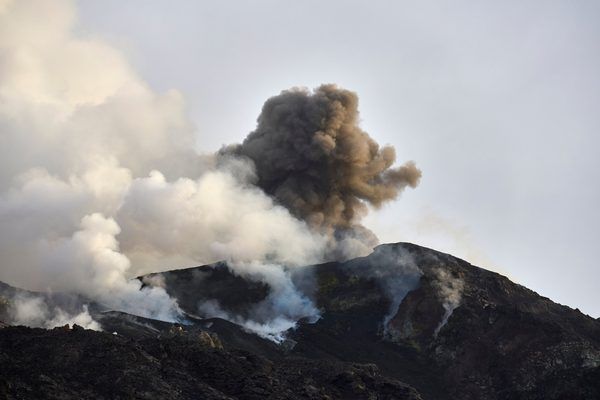 Saharan dust and Etna ash: what they are and how to protect the air at homeRead more: Saharan dust and Etna ash: what they are and how to protect the air at home
Yellow skies from African dust and falls of Etna ash: two increasingly frequent natural phenomena that bring fine...
-
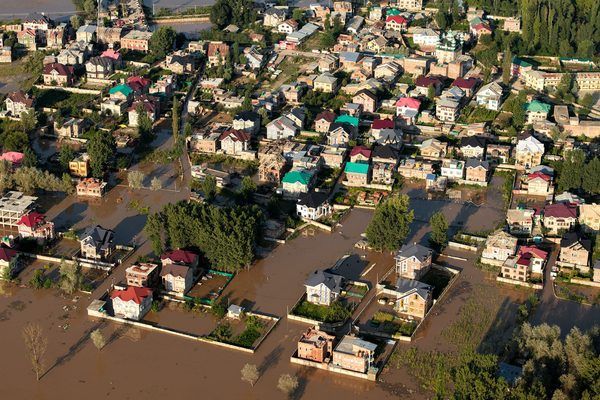 Floods and indoor air: what happens afterwards and how to protect yourselfRead more: Floods and indoor air: what happens afterwards and how to protect yourself
After a flood, the air problem does not end when the water recedes: mold, bacteria, dust and odors can linger at home...
-
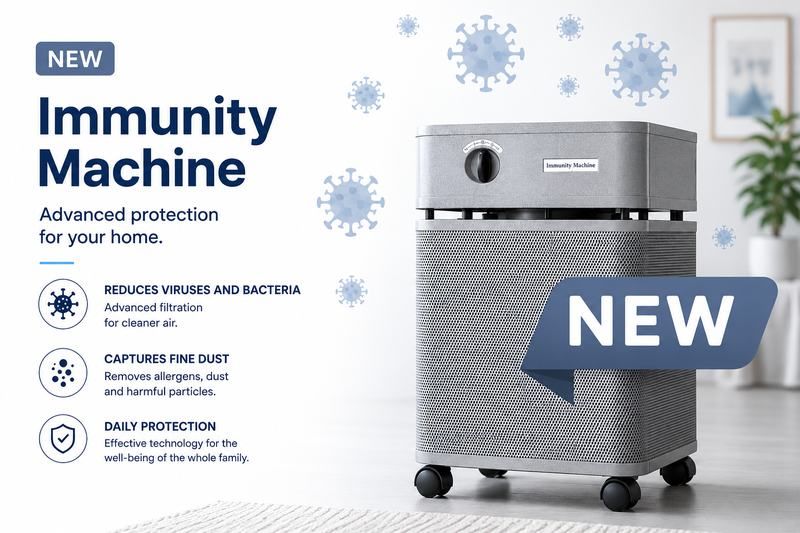 Austin Air announces the launch of the Immunity Machine, its most advanced air purifier.Read more: Austin Air announces the launch of the Immunity Machine, its most advanced air purifier.
Austin Air introduces the Immunity Machine, its most advanced air purifier: 8-phase filtration with medical-grade...
-
 MCS and Air Purification: A Guide to More Livable SpacesRead more: MCS and Air Purification: A Guide to More Livable Spaces
A practical guide to air purification for people with MCS and chemical sensitivity: how to choose the right purifier,...
-
 Air Purifiers: Complete Guide and How to Choose the Right OneRead more: Air Purifiers: Complete Guide and How to Choose the Right One
How to choose the right air purifier: HEPA and carbon filters, sizing, noise, running costs and maintenance....
-
 VOCs at home: what they are, where they hide and how to really remove themRead more: VOCs at home: what they are, where they hide and how to really remove them
Paint, new furniture, cleaning products and gas stoves release VOCs that no HEPA filter can stop. Discover where they...
-
 Extreme heat and air quality: what changes and how to protect yourselfRead more: Extreme heat and air quality: what changes and how to protect yourself
Extreme heat worsens the air quality we breathe, affecting everyone and especially people with MCS. Causes, updated...
-
 Asthma and Indoor Air Quality: What Science Says and How to Protect YourselfRead more: Asthma and Indoor Air Quality: What Science Says and How to Protect Yourself
Asthma affects millions of people and worsens at night, when exposure to bedroom allergens is highest. Clinical...
-
 Ten independent clinical trials on Austin Air: what they showRead more: Ten independent clinical trials on Austin Air: what they show
Eight published studies and two in progress, conducted by eight independent research institutions on asthma,...
Blog categories
Search in blog
Saharan dust and Etna ash: what they are and how to protect the air at home
Yellow skies from African dust and falls of volcanic ash: two natural phenomena typical of Italy that bring fine particles right into the home. What they are, when to worry and how to protect the air you breathe.
Reading: ~8 min
Two natural phenomena, increasingly frequent
When we think of air pollution we think of traffic, industry and heating. In Italy, however, there are also two natural sources of fine particles that, on certain days, weigh on the air as much as man-made ones or more: Saharan dust, which reaches the whole peninsula, and ash from Mount Etna, which falls on eastern Sicily.
They are different phenomena, but they have one thing in common: they bring very small mineral particles into the air, which easily get indoors too. And according to the European atmosphere monitoring service Copernicus, Saharan dust episodes are becoming more frequent and more intense.
Saharan dust
Saharan dust is extremely fine sand lifted by winds in the desert and carried for thousands of kilometres. It reaches Italy mainly with the sirocco wind and with weather systems forming over North Africa, in any season: you can recognise it by the yellowish or milky sky and, when it rains, by the "mud rain" that leaves marks on cars, windows and balconies.
Frequent episodes
In the first half of 2025 Copernicus tracked numerous episodes: between January and May many dust plumes reached Italy and Greece, with hazy skies and dust reaching the ground.
PM10 peaks
In early March 2026 a large plume crossed south-western Europe, Italy included, with PM10 above EU standards and warnings for the most vulnerable people to limit outdoor exposure.
The case of Rome
A study of four years of measurements in Rome found Saharan dust at ground level on about one day in six, with average PM10 increases of about 12-16 µg/m³ on the days affected.
Saharan dust weighs mainly on PM10, but it also contains finer particles. On episode days it can push air quality beyond the limits even in normally clean areas, and it adds to the pollution already present in cities.
Ash from Mount Etna
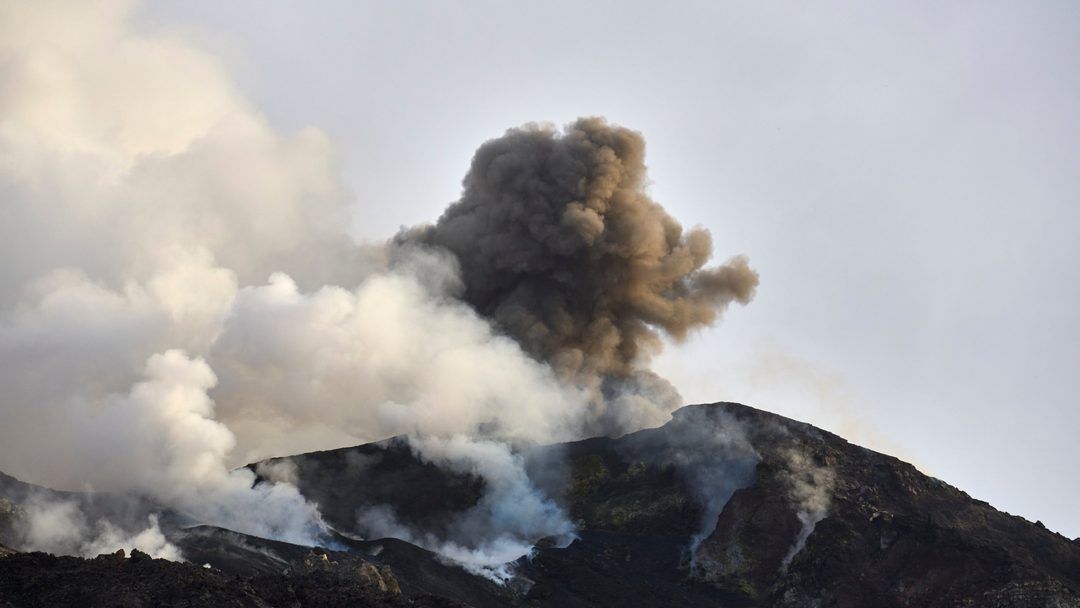
During its most intense eruptive phases Etna emits ash clouds that, depending on the wind, fall on Catania and the surrounding towns. Volcanic ash is made of tiny fragments of rock and volcanic glass: besides the visible grains that cover roads, balconies and cars, the fallout also contains particles the size of PM10 and smaller.
The most delicate moment is often not the ashfall itself but the following days: accumulated ash is stirred up again by wind and traffic and returns to the air until roads and outdoor areas are cleaned. Added to this are volcanic gases, such as sulfur dioxide, which can be noticed by their pungent smell in the areas closest to the volcano.
What is known, and what is not
Experts urge calm: the health risk from volcanic ash is generally not considered high. Ash can, however, irritate the eyes, nose and airways and worsen conditions such as allergic rhinitis and asthma. Research on the long-term effects of repeated exposure is still ongoing. This is why the authorities recommend wearing masks during ashfall and afterwards, wherever ash has built up heavily.
Who should take extra care
Dust and ash do not affect everyone in the same way. Those most affected are people with asthma, COPD, respiratory allergies or heart conditions, children, who breathe more air relative to their weight, and older adults. For them, reducing exposure on episode days is particularly important.
What to do during an episode
- Stay informed: check the air quality index for your area (your regional ARPA agency or the EEA European index) and, for Etna ash, INGV bulletins and your municipality's notices.
- Keep windows closed during the hours of highest concentration and air the rooms when levels drop.
- Outdoors, wear a well-fitted FFP2 mask, especially during ashfall and street cleaning; avoid outdoor exercise on the worst days.
- Clean with damp methods: do not sweep or dry-vacuum dust and ash on balconies, sills and floors, as this puts them back into the air. Use damp cloths and mops, and for ash follow your municipality's collection instructions.
- In the car, switch on air recirculation in areas with dust or ash.
- Do not add indoor pollution on critical days: no candles, incense, smoking or prolonged frying.
 Where an air purifier helps
Even with the windows closed, some fine particles get indoors through gaps, doors and air exchange. A purifier running continuously in the rooms you use most reduces what remains suspended in the air:
- the medical-grade HEPA filter captures fine dust and ash particles: according to official Austin Air data, 99.97% of particles at 0.3 µm and 99% at 0.1 µm;
- the pre-filter is the first to stop larger particles: during and after an episode it is worth vacuuming it more often, always without removing it, using the soft brush attachment;
- the activated carbon and zeolite, up to 6.8 kg in standard models, adsorb odors and gases; for those living near Etna, Austin Air indicates the HealthMate Plus as more effective on sulfur dioxide as well.
Which Austin Air model to choose
- HealthMate®: the choice for general use, with a medical-grade HEPA filter for dust and fine particles and non-impregnated activated carbon and zeolite for odors and VOCs.
- HealthMate Plus®: with added potassium iodide-impregnated carbon, more effective on gases such as sulfur dioxide near Etna or those from city traffic.
- HealthMate Junior: for rooms up to 40 m², for example the bedroom.
An air purifier helps keep the air at home cleaner, but it does not replace the guidance of the authorities or the other precautions: closed windows at critical times, a mask outdoors and damp cleaning remain essential.
In summary
Saharan dust and Etna ash are natural phenomena Italians have always lived with, but dust episodes are increasingly frequent, and ash, where it falls, can stay in the air for days. Staying informed, closing windows at the worst times, protecting yourself outdoors and cleaning the right way greatly reduces exposure; a purifier with a medical-grade HEPA filter and activated carbon completes the protection in the rooms where you spend the most time.
 Contact us
 WhatsApp
Useful links
 Air quality in Italy in 2026
- Urban air pollution and traffic
- Wildfires and air quality
- Wildfire smoke: the practical guide
- Floods and indoor air
 Purifier buying guide
 All Austin Air purifiers
Note: air purifiers are not medical devices and do not replace the prevention measures, diagnoses or treatments recommended by a doctor, nor the guidance of local authorities. Performance may vary depending on use and environment.
Sources: Copernicus Atmosphere Monitoring Service (CAMS), releases on Saharan dust episodes in Europe (2024, 2025) and image of 5 March 2026; Gobbi G.P. et al., "Changes in particulate matter physical properties during Saharan advections over Rome (Italy): a four-year study, 2001–2004", Atmospheric Chemistry and Physics 13, 2013; INGV, Etna Observatory; guidance from municipalities in the Etna area on volcanic ashfall.
Posted in:
Air Quality Blog
Related posts
-
Asthma and Indoor Air Quality: What Science Says and How to Protect Yourself
Asthma affects millions of people and worsens at night, when exposure to bedroom allergens is highest. Clinical...Read more
-
Ten independent clinical trials on Austin Air: what they show
Eight published studies and two in progress, conducted by eight independent research institutions on asthma,...Read more
-
Air Purifiers: Complete Guide and How to Choose the Right One
How to choose the right air purifier: HEPA and carbon filters, sizing, noise, running costs and maintenance....Read more
-
Austin Air announces the launch of the Immunity Machine, its most advanced air purifier.
Austin Air introduces the Immunity Machine, its most advanced air purifier: 8-phase filtration with medical-grade...Read more
-
MCS and Air Purification: A Guide to More Livable Spaces
A practical guide to air purification for people with MCS and chemical sensitivity: how to choose the right purifier,...Read more
Leave a comment