Coconut shell or coal: two materials with different pores. Here is what the studies say and which works best with...

Latest posts
-
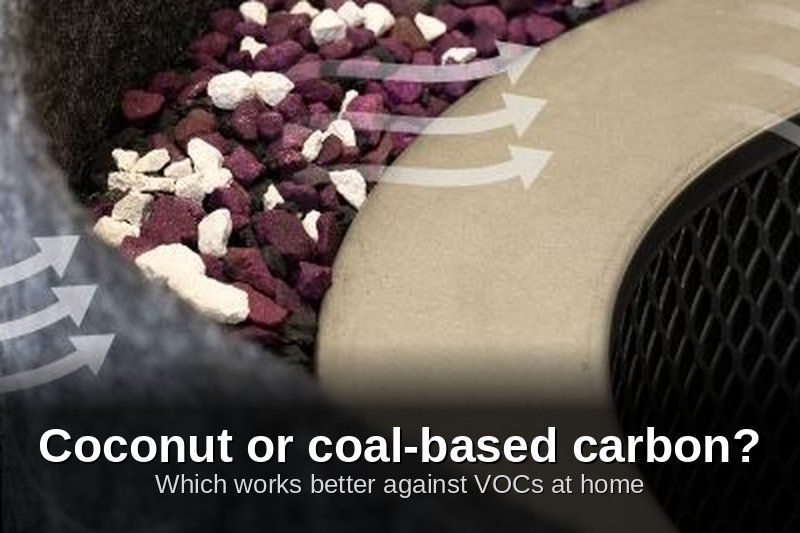 Coconut or coal-based carbon: which is better for VOCsRead more: Coconut or coal-based carbon: which is better for VOCs
-
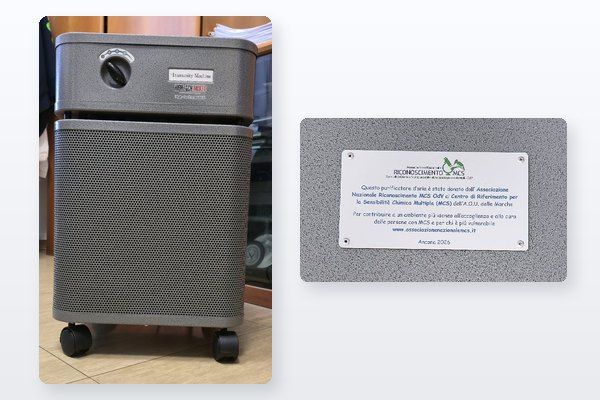 An air purifier donated to the MCS Reference Center in Ancona: a project made possible by the 5x1000Read more: An air purifier donated to the MCS Reference Center in Ancona: a project made possible by the 5x1000
The National Association for the Recognition of MCS donated an Austin Air Immunity Machine® air purifier to the MCS...
-
 Dog and cat odors at home: how to get rid of litter box ammonia tooRead more: Dog and cat odors at home: how to get rid of litter box ammonia too
The ammonia smell of the litter box, a wet dog's coat, hair and allergens everywhere: anyone living with dogs and...
-
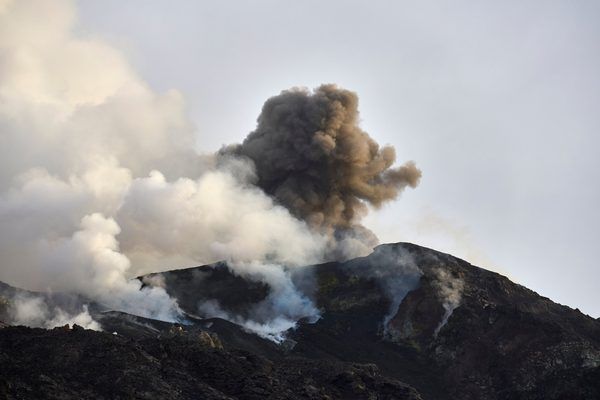 Saharan dust and Etna ash: what they are and how to protect the air at homeRead more: Saharan dust and Etna ash: what they are and how to protect the air at home
Yellow skies from African dust and falls of Etna ash: two increasingly frequent natural phenomena that bring fine...
-
 Floods and indoor air: what happens afterwards and how to protect yourselfRead more: Floods and indoor air: what happens afterwards and how to protect yourself
After a flood, the air problem does not end when the water recedes: mold, bacteria, dust and odors can linger at home...
-
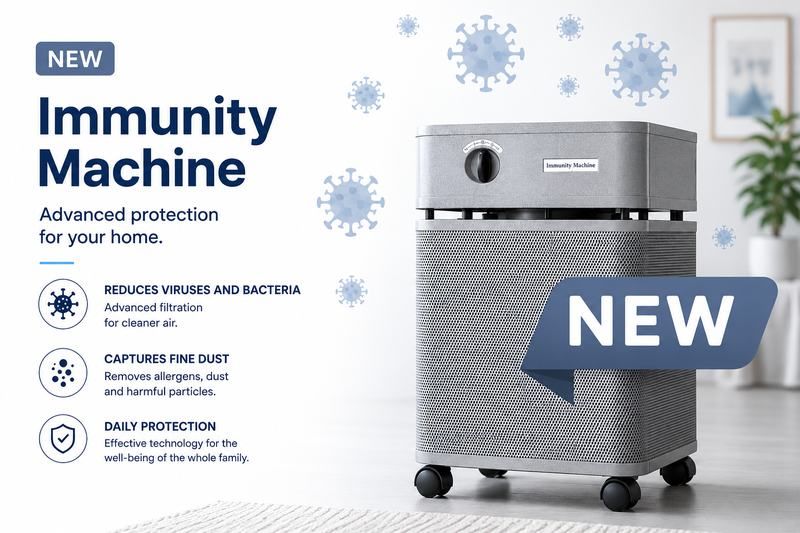 Austin Air announces the launch of the Immunity Machine, its most advanced air purifier.Read more: Austin Air announces the launch of the Immunity Machine, its most advanced air purifier.
Austin Air introduces the Immunity Machine, its most advanced air purifier: 8-phase filtration with medical-grade...
-
 MCS and Air Purification: A Guide to More Livable SpacesRead more: MCS and Air Purification: A Guide to More Livable Spaces
A practical guide to air purification for people with MCS and chemical sensitivity: how to choose the right purifier,...
-
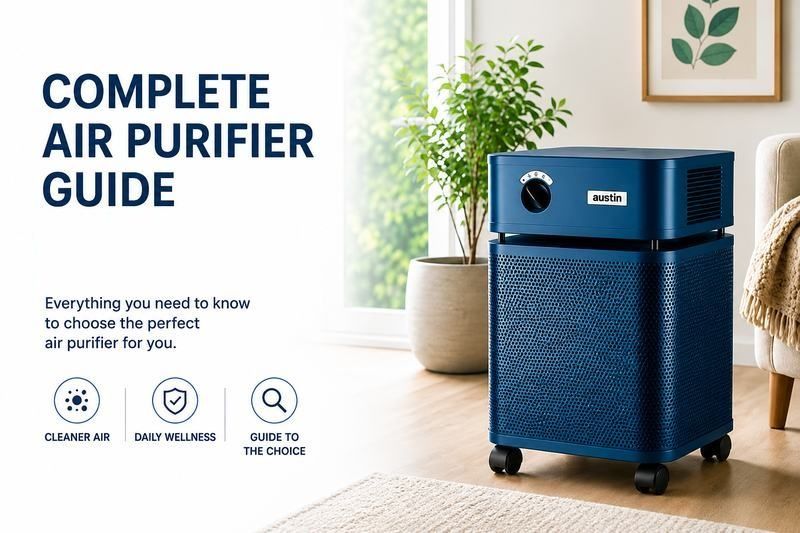 Air Purifiers: Complete Guide and How to Choose the Right OneRead more: Air Purifiers: Complete Guide and How to Choose the Right One
How to choose the right air purifier: HEPA and carbon filters, sizing, noise, running costs and maintenance....
-
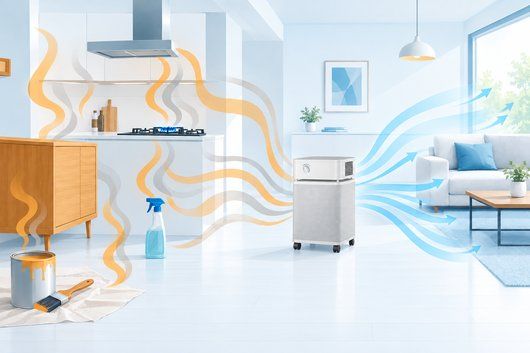 VOCs at home: what they are, where they hide and how to really remove themRead more: VOCs at home: what they are, where they hide and how to really remove them
Paint, new furniture, cleaning products and gas stoves release VOCs that no HEPA filter can stop. Discover where they...
-
 Extreme heat and air quality: what changes and how to protect yourselfRead more: Extreme heat and air quality: what changes and how to protect yourself
Extreme heat worsens the air quality we breathe, affecting everyone and especially people with MCS. Causes, updated...
Blog categories
Search in blog
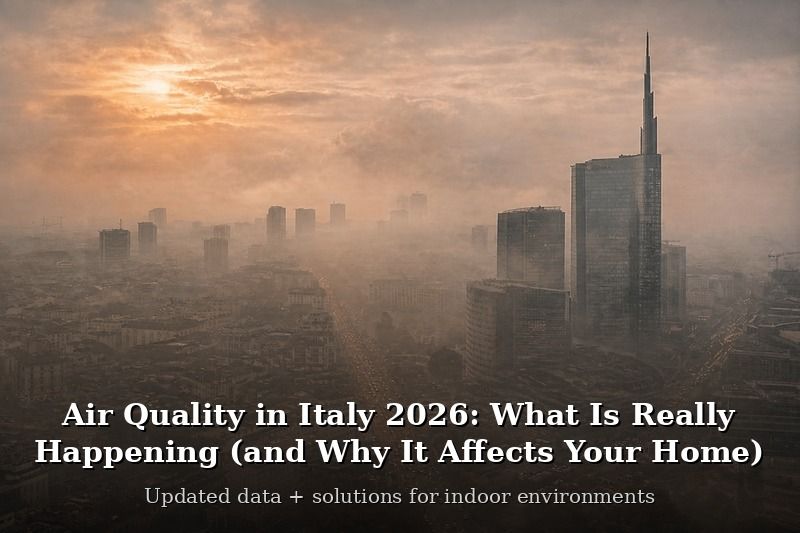
Air Quality in Italy 2026: what’s really happening (and why it affects your home)
The 2026 data confirm air that is still too polluted in many parts of Italy. Why it also concerns the air at home and what you can do about the environment you live in every day.
Updated: • Reading: ~5 min
In recent days, several figures have brought attention back to an increasingly critical issue: air quality in Italy. According to Il Fatto Quotidiano, the numbers for the first quarter of 2026 show a significant worsening, with pollutant levels still too high in many areas of the country.
The data: particulate, NO2 and ozone still above the limits
The analyses show that the main pollutants (in particular PM2.5, nitrogen dioxide (NO2) and ozone) continue to frequently exceed the recommended limits. These are substances associated with respiratory and cardiovascular problems and with an increased risk for the most vulnerable groups of the population.
"particulate, ozone and nitrogen dioxide out of control"
Source: Il Fatto Quotidiano
The picture is clear: despite regulations and controls, air pollution remains a structural problem, especially in urban areas and in the Po Valley. To learn more about the role of traffic, read our article on urban air pollution and traffic.
Doctors sound the alarm: hundreds of PM2.5-linked deaths in Verona too
In late August 2026, Italian newspaper L'Arena reported comments from Giovanni Beghini, president of ISDE Doctors for the Environment Verona, on data from the "Cambiamo Aria" ("Let's Change the Air") project (ISDE Italia, Kyoto Club's Sustainable Urban Mobility Observatory, Clean Cities Campaign). Across a population of over 8 million residents aged 30+ in the 27 Italian cities monitored, an estimated 6,731 deaths are attributable to PM2.5 exposure, around 8% of non-traumatic adult mortality.
The share is higher in the North: about 14% in Milan, 12% in Turin and Padua, 11% in Vicenza and Brescia. Verona, along with Venice, Parma and Modena, sits around 10% (for Turin alone, the report estimates 855 premature deaths in 2025). According to Beghini, "one in ten deaths may be linked to PM2.5 exposure".
Looking at the stricter new EU limits coming into force in 2030 (Directive 2024/2881), 25 of the 27 monitored cities already exceed the annual average PM2.5 value set by the directive.
Doctors point out that the greatest risks fall on children, the elderly, pregnant women and people with chronic conditions, as well as those in socioeconomically disadvantaged circumstances. And they highlight a key point: air pollution, the climate crisis and heat waves are not separate emergencies, but different manifestations of the same environmental and health crisis.
Why this also concerns the air you breathe at home
An often underestimated aspect is that outdoor air directly affects indoor air. Fine particles and polluting gases enter the home through windows, doors and ventilation systems.
According to the US EPA, indoor air can be up to 5 times more polluted than outdoor air, due to the build-up of substances and poor ventilation.
The solution: controlling indoor air
If it is not possible to act on outdoor air quality, it is possible to act on the environment where you live every day. High-quality air purifiers, with medical-grade HEPA filters and activated carbon, are designed to remove:
- Fine particles (PM2.5 and PM10)
- Allergens and pollen
- Odours and chemical compounds (VOCs)
- Bacteria and ultrafine particles
Professional solutions such as Austin Air purifiers use advanced filtration systems designed for continuous use in homes and workplaces. To find your way among the models, see our complete guide to air purifiers.
Recommended models to improve indoor air quality


Medical-grade HEPA and activated carbon and zeolite: the ideal base for everyday air quality.


Adds impregnated carbon for polar VOCs such as formaldehyde: suited to new furniture, paint and household chemicals.


Adds the military HEGA carbon cloth and is designed to run quietly all night.


8-stage filtration with HEPA, carbon and HEGA: the most complete protection in the range.
Conclusion
The 2026 data confirm a now evident reality: air pollution is not a temporary problem but a condition to live with.
This is why improving indoor air quality is no longer just a matter of comfort, but a concrete decision for everyday health.
Useful links
 Purifier buying guide
 Urban air pollution and traffic
- Extreme heat and air quality
 Compare the Austin Air models
 Air changes calculator
 All Austin Air purifiers
 Contact us
Sources: Il Fatto Quotidiano; L'Arena, 21 August 2026 (as covered by ISDE News, Italian); the "Cambiamo Aria" report by ISDE Italia, Kyoto Club and Clean Cities Campaign, as covered by Materia Rinnovabile (Italian). Note: the figures cited come from journalistic sources and an independent report, and may vary depending on environmental and geographical conditions. Air purifiers are not medical devices.
Posted in:
Air Quality Blog
Related posts
-
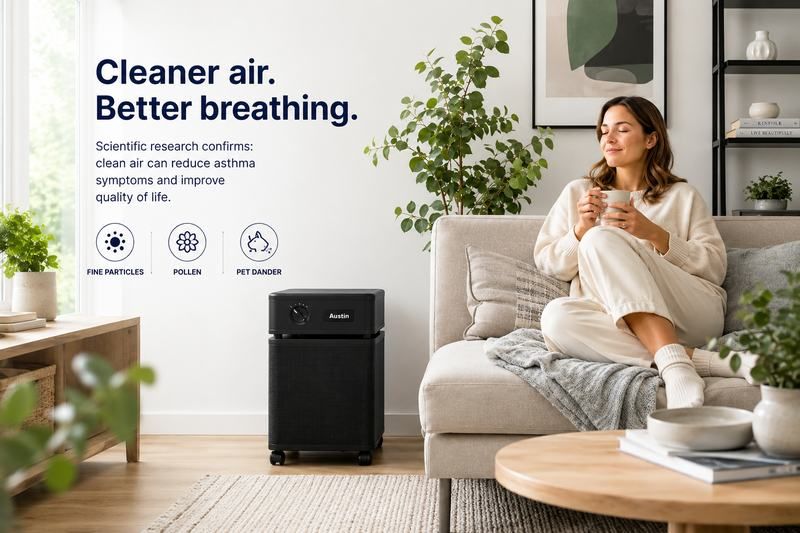 Asthma and Indoor Air Quality: What Science Says and How to Protect Yourself
Asthma affects over 3 million people in Italy and often worsens at night, when exposure to bedroom allergens is...Read more
-
 Ten independent clinical trials on Austin Air: what they show
Eight published studies and two in progress, conducted by eight independent research institutions on asthma,...Read more
-
Air Purifiers: Complete Guide and How to Choose the Right One
How to choose the right air purifier: HEPA and carbon filters, sizing, noise, running costs and maintenance....Read more
-
Austin Air announces the launch of the Immunity Machine, its most advanced air purifier.
Austin Air introduces the Immunity Machine, its most advanced air purifier: 8-phase filtration with medical-grade...Read more
-
MCS and Air Purification: A Guide to More Livable Spaces
A practical guide to air purification for people with MCS and chemical sensitivity: how to choose the right purifier,...Read more
Leave a comment