
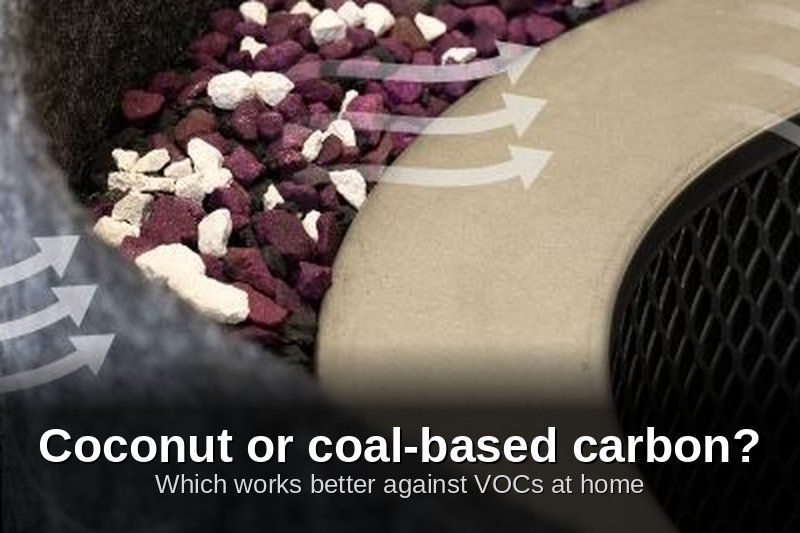
Coconut shell or coal: two materials with different pores. Here is what the studies say and which works best with...
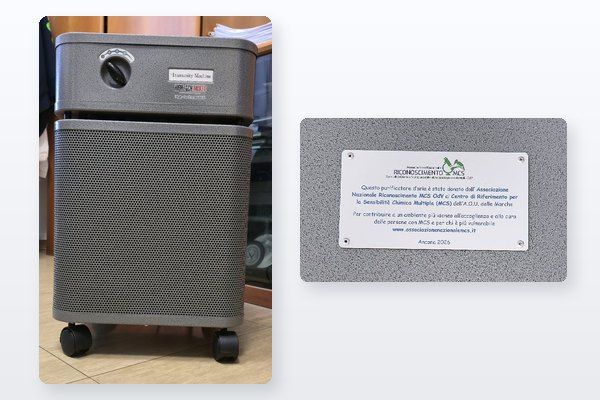


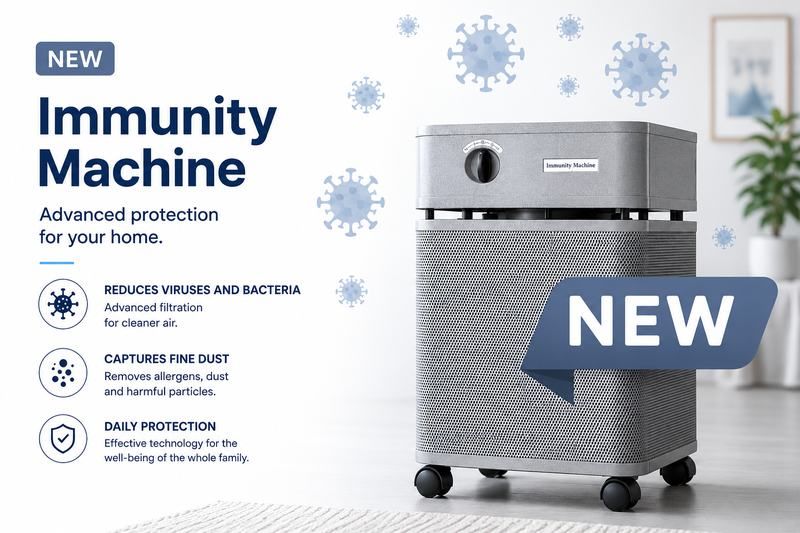


Eight published studies and two in progress, conducted by eight independent research institutions: what was measured and what actually emerged.
Read time: ~9 min
Most air purifiers are sold on the basis of manufacturer claims. Austin Air is a different case for one verifiable reason: Austin Air units are named in the methods sections of peer-reviewed research, placed in real homes and compared against sham units by independent investigators.
Here are all ten studies conducted over more than twenty-five years: eight published and two still in progress. For those in progress we report no results, because there are none.
8
published studies
2
studies in progress
8
research institutions
25+
years of research
Transparency about the manufacturer's role
In several of these studies Austin Air donated the units or supplied them at a discount, and states this openly. In every case the published papers report that Austin Air had no role in the study design, the conduct of the trial, the analysis of the data, or the interpretation of the results. Funding came from the National Institutes of Health, the U.S. Department of Housing and Urban Development, and the institutions themselves. The participating institutions do not endorse Austin Air or its products.
The eight published studies
Cincinnati Children's Hospital Medical Center · Pediatrics (AAP) · 2001-2011
Fewer unscheduled asthma-related medical visits in children
The Cincinnati Asthma Prevention Study remains one of the most rigorous air purifier trials ever conducted. 225 children aged 6 to 12 with physician-diagnosed asthma, exposed to secondhand smoke at home: in a double-blind, randomized design, each household received either two working HealthMate units or two identical sham units. Neither the families nor the researchers knew which was which.
Findings: homes with working units had 18.5% fewer unscheduled asthma-related medical visits (p = 0.043), 42 fewer visits over the course of the study. Fine airborne particles fell 25% against 5% in the sham group (p = 0.026). The benefit was larger among families who ran the units consistently.
Johns Hopkins University · Indoor Air · 2014
Nitrogen dioxide in homes with gas stoves
A three-arm randomized trial in 100 Baltimore homes with unvented gas stoves. Three interventions compared: replacing the gas stove with an electric one, installing a ventilation hood, or placing HealthMate purifiers in the home.
Findings: with the purifiers, indoor NO₂ dropped 27% in the kitchen and 22% in the bedroom within one week, with a 19% overall reduction sustained at three months (p = 0.05). The most striking result concerns the ventilation hood, the intervention almost everyone assumes works: it produced no significant reduction at all. A portable purifier outperformed the hood above the stove. Only replacing the stove with an electric one did better, at 51%.
Johns Hopkins University · Environmental Research · 2018
Pregnant women and infants living with a smoker
Conducted with the Baltimore City Health Department on one of the most vulnerable populations. Each household received two HealthMate Standard units alongside secondhand smoke education. This was a single-arm feasibility study, with no control group.
Findings: significant reduction in PM2.5 (p andlt; 0.001) and in salivary cotinine, a biomarker of nicotine exposure, in non-smoking women (p andlt; 0.01). Adherence was 91%, and 98% of participants said they would recommend an air purifier. As the authors note, and as we repeat, a purifier is no substitute for a smoke-free home.
University of Washington, HAPI study · Environmental Health and Indoor Air · 2021
Children with asthma in an agricultural area, Yakima Valley
75 randomized families in the Yakima Valley, a region facing heavy indoor air pollution from intensive crop farming, dairy operations, and pesticide use. All had children with asthma aged 6 to 12. One group received an asthma education programme alone, the other the same programme plus two Austin Air Pet Machine 410 purifiers.
Air quality: PM2.5 was 60% lower in the child's sleeping area (p andlt; 0.0001) and 42% lower in the living area (p = 0.002).
Asthma outcomes (secondary analysis): 65% lower risk of any unplanned clinical utilization, 57% lower risk of ever meeting the cutoff for poorly controlled asthma, and a lower risk of reporting symptoms in the prior two weeks.
Tufts University and Franklin W. Olin College of Engineering · Hypertension (AHA) · 2021
Traffic pollution and blood pressure
Published in Hypertension, the journal of the American Heart Association, this was the first randomized controlled trial to show that reducing traffic-related air pollution prevents acute increases in blood pressure. A three-period crossover design: 77 participants, three two-hour sessions in a room beside an interstate highway, with high, medium, and low pollution levels created by varying ventilation and the number of active HEPA units.
Findings: HEPA filtration substantially lowered indoor traffic-related pollutant concentrations, and that reduction prevented the acute rise in systolic blood pressure seen at higher levels. The authors concluded that reducing indoor exposure through HEPA filtration may help lower the risk of hypertension for people living close to major roadways.
Johns Hopkins University, CLEAN AIR study · AJRCCM · 2021
COPD: exacerbations and rescue medication
Among the most rigorous trials ever conducted on air purification and respiratory disease. 116 former smokers with moderate-to-severe COPD, assigned double-blind to either two working HealthMate HM400 units or two identical sham units, followed for six months.
Findings: a significantly lower rate of moderate exacerbations (incidence rate ratio 0.32) and reduced rescue medication use (0.54), with significant improvement in respiratory symptoms.
One detail worth reporting in full: the primary endpoint was met only among participants who used the purifier consistently, more than 80% of the time. The honest read is that the purifier works, but you have to run it.
University of Connecticut, HAFTRAP study · JACC (2025) and Scientific Reports (2026)
Blood pressure and cognitive function
A randomized crossover design among people living near high-traffic roadways: each participant used an Austin Air purifier for one month and a sham unit for one month, with a washout period in between. The units were custom-built HealthMates fitted with HEPA media only, no carbon or zeolite, because the researchers wanted to isolate the effect of particle removal.
Findings: significant reduction in indoor particulate and, among participants with elevated baseline systolic pressure, clinically important reductions in blood pressure. In the secondary cognitive analysis, participants aged 40 and older completed an executive-function test on average 12% faster after the purifier than after the sham unit (54.0 vs 61.4 seconds; p = 0.02). No significant effect was seen under 40.
University of Massachusetts Lowell · Toxics · November 2025
Low-income households with gas stoves
67 low-income households in Lowell, Massachusetts, followed for twelve months. Four months of baseline measurements, then the purifiers were introduced and monitoring continued, using statistical models to isolate the effect of purifier use while controlling for stove usage.
Findings: indoor NO₂ dropped 36%, from 20.16 to 12.79 ppb (p andlt; 0.001). PM2.5 dropped 45%, from 17.12 to 9.16 µg/m³ (p andlt; 0.001). Greater purifier use corresponded to greater reductions, while heavier stove use drove NO₂ back up: confirmation that the purifier was the operative variable.
The two studies in progress
We list them for completeness, but they have not reported results and no claim on this page rests on them.
Johns Hopkins University in progress
Effects of HEPA filtration on particulate exposure in infants and very young children, among the most vulnerable populations: they spend most of their time indoors, breathe more air relative to body weight, and have developing respiratory and neurological systems.
Illinois Institute of Technology protocol published 2025
With the Jesse Brown VA Medical Center in Chicago: 80 veterans with moderate-to-severe COPD, randomized for a full year between a working HealthMate and a sham unit. A protocol describes how a study will be run and contains no findings.
What this means in practice
- The strongest evidence concerns people with existing respiratory or cardiovascular conditions and those exposed to indoor or traffic-related pollution.
- The benefit depends on consistent use: the CLEAN AIR study shows this with unusual clarity, as the primary endpoint was met only among those who kept the purifier running.
- Some studies reported null or mixed findings, which is the clearest evidence that the investigators were writing what they found.
- A purifier reduces exposure to airborne pollutants. It is not a treatment and does not replace medical care, nor removing the source of pollution where that is possible.
These studies are also referenced in our article Why Austin Air purifiers are the best, which also covers construction and filter media. The full list, with DOIs and links to the publications, is on the official Austin Air page.
The model used in the great majority of this research is the Austin Air HealthMate, available together with the rest of the Austin Air range at high-techmarket.it, authorized Austin Air importers for Italy.
 Contact us
 WhatsApp
The original publications
Every study cited in this article is published in a peer-reviewed scientific journal. Below you will find the full references, with a link (DOI) to the original publication.
- Lanphear BP et al. Effects of HEPA Air Cleaners on Unscheduled Asthma Visits and Asthma Symptoms for Children Exposed to Secondhand Tobacco Smoke. Pediatrics, 2011. Cincinnati Children's Hospital. DOI: 10.1542/peds.2009-2312
- Paulin LM et al. Home interventions are effective at decreasing indoor nitrogen dioxide concentrations. Indoor Air, 2014. Johns Hopkins University. DOI: 10.1111/ina.12085
- Rice JL et al. The feasibility of an air purifier and secondhand smoke education intervention in homes of inner city pregnant women and infants living with a smoker. Environmental Research, 2018. Johns Hopkins University. DOI: 10.1016/j.envres.2017.10.024
- Riederer AM et al. Effectiveness of portable HEPA air cleaners on reducing indoor PM2.5 and NH3 in an agricultural cohort of children with asthma: a randomized intervention trial. Indoor Air, 2021. University of Washington. DOI: 10.1111/ina.12753
- Karr CJ et al. Randomized trial of a portable HEPA air cleaner intervention to reduce asthma morbidity among Latino children in an agricultural community. Environmental Health, 2021. University of Washington. DOI: 10.1186/s12940-021-00816-w
- Hudda N et al. Effect of Reducing Ambient Traffic-Related Air Pollution on Blood Pressure: A Randomized Crossover Trial. Hypertension, 2021. Tufts University and Olin College. DOI: 10.1161/HYPERTENSIONAHA.120.15580
- Hansel NN et al. Randomized Clinical Trial of Air Cleaners to Improve Indoor Air Quality and Chronic Obstructive Pulmonary Disease Health: Results of the CLEAN AIR Study. American Journal of Respiratory and Critical Care Medicine, 2021. Johns Hopkins University. DOI: 10.1164/rccm.202103-0604OC
- Brugge D et al. Effect of HEPA Filtration Air Purifiers on Blood Pressure: A Pragmatic Randomized Crossover Trial. Journal of the American College of Cardiology, 2025. University of Connecticut. DOI: 10.1016/j.jacc.2025.06.037
- Pellegrino N et al. Effect of HEPA filtration air purifiers on cognitive function: a secondary outcome analysis of a pragmatic randomized crossover trial. Scientific Reports, 2026. University of Connecticut. DOI: 10.1038/s41598-026-48063-8
- Kadiri K et al. Effectiveness of HEPA/Carbon Filter Air Purifier in Reducing Indoor NO2 and PM2.5 in Homes with Gas Stove Use in Lowell, Massachusetts. Toxics, 2025. University of Massachusetts Lowell. DOI: 10.3390/toxics13121030
- Stephens B et al. Study protocol for a 1-year, randomized, single-blind, parallel group trial of stand-alone indoor air filtration in the homes of US military Veterans with moderate to severe COPD in metropolitan Chicago. Trials, 2025. Illinois Institute of Technology and Jesse Brown VA Medical Center. DOI: 10.1186/s13063-025-08880-0 (study protocol: no results published yet)
Useful links
 Why Austin Air purifiers are the best
 Austin Air air purifier buying guide
 Austin Air model comparison
 We are authorized Austin Air importers for Italy
- Asthma study
 All Austin Air purifiers
Note: air purifiers are not medical devices and are not intended to diagnose, treat, cure, or prevent any disease. The results cited refer to the studies mentioned, their specific samples and experimental conditions, carried out mainly in the United States. Performance may vary depending on the environment and how the unit is used. The participating institutions do not endorse Austin Air or its products.
Source: Austin Air Systems, Clinical Trials, with references to publications in Pediatrics, Indoor Air, Environmental Research, Environmental Health, Hypertension, AJRCCM, JACC, Scientific Reports, and Toxics.

Leave a comment