Coconut shell or coal: two materials with different pores. Here is what the studies say and which works best with...

Latest posts
-
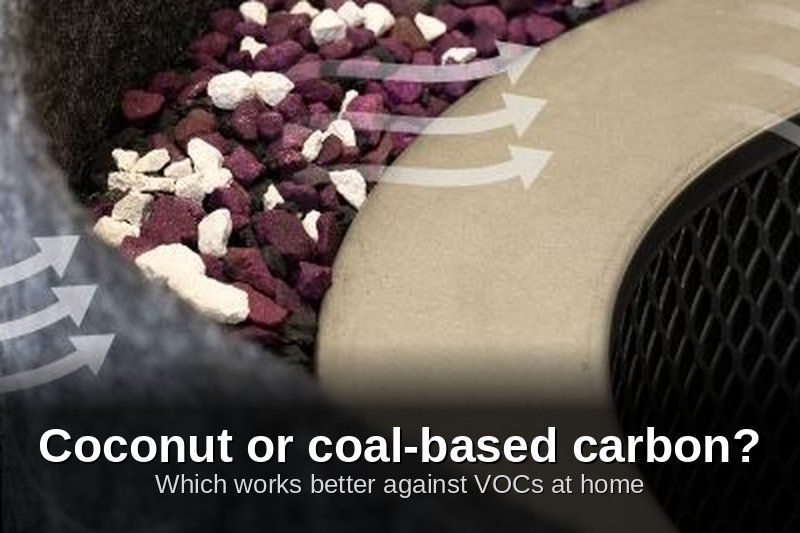 Coconut or coal-based carbon: which is better for VOCsRead more: Coconut or coal-based carbon: which is better for VOCs
-
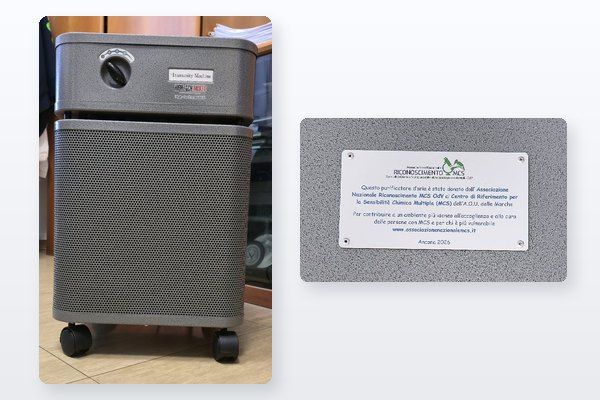 An air purifier donated to the MCS Reference Center in Ancona: a project made possible by the 5x1000Read more: An air purifier donated to the MCS Reference Center in Ancona: a project made possible by the 5x1000
The National Association for the Recognition of MCS donated an Austin Air Immunity Machine® air purifier to the MCS...
-
 Dog and cat odors at home: how to get rid of litter box ammonia tooRead more: Dog and cat odors at home: how to get rid of litter box ammonia too
The ammonia smell of the litter box, a wet dog's coat, hair and allergens everywhere: anyone living with dogs and...
-
 Saharan dust and Etna ash: what they are and how to protect the air at homeRead more: Saharan dust and Etna ash: what they are and how to protect the air at home
Yellow skies from African dust and falls of Etna ash: two increasingly frequent natural phenomena that bring fine...
-
 Floods and indoor air: what happens afterwards and how to protect yourselfRead more: Floods and indoor air: what happens afterwards and how to protect yourself
After a flood, the air problem does not end when the water recedes: mold, bacteria, dust and odors can linger at home...
-
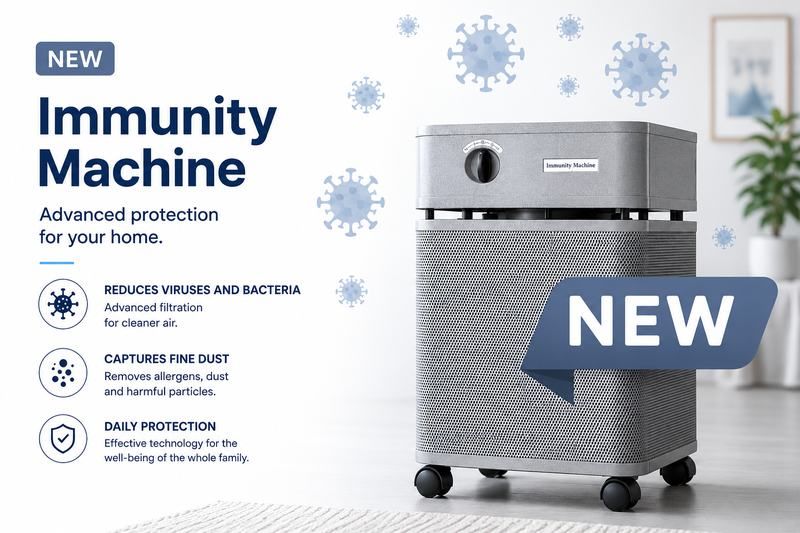 Austin Air announces the launch of the Immunity Machine, its most advanced air purifier.Read more: Austin Air announces the launch of the Immunity Machine, its most advanced air purifier.
Austin Air introduces the Immunity Machine, its most advanced air purifier: 8-phase filtration with medical-grade...
-
 MCS and Air Purification: A Guide to More Livable SpacesRead more: MCS and Air Purification: A Guide to More Livable Spaces
A practical guide to air purification for people with MCS and chemical sensitivity: how to choose the right purifier,...
-
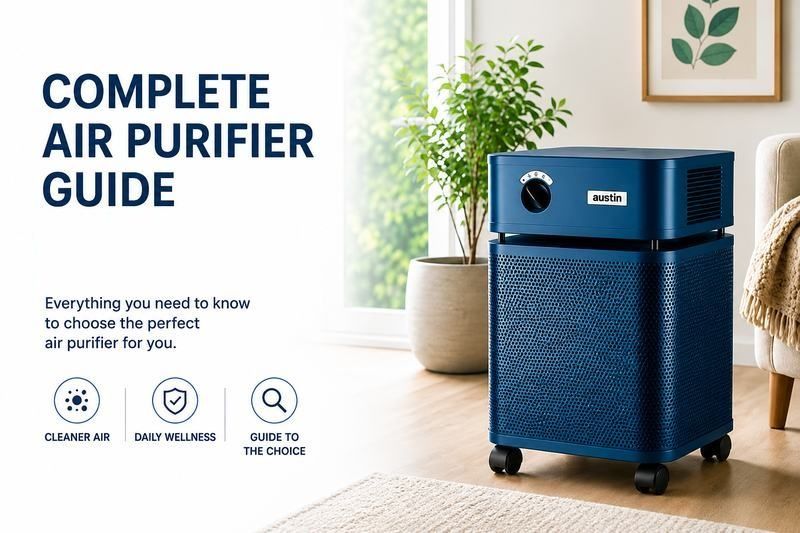 Air Purifiers: Complete Guide and How to Choose the Right OneRead more: Air Purifiers: Complete Guide and How to Choose the Right One
How to choose the right air purifier: HEPA and carbon filters, sizing, noise, running costs and maintenance....
-
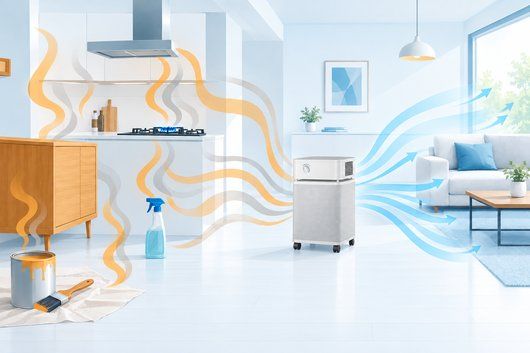 VOCs at home: what they are, where they hide and how to really remove themRead more: VOCs at home: what they are, where they hide and how to really remove them
Paint, new furniture, cleaning products and gas stoves release VOCs that no HEPA filter can stop. Discover where they...
-
 Extreme heat and air quality: what changes and how to protect yourselfRead more: Extreme heat and air quality: what changes and how to protect yourself
Extreme heat worsens the air quality we breathe, affecting everyone and especially people with MCS. Causes, updated...
Blog categories
Search in blog
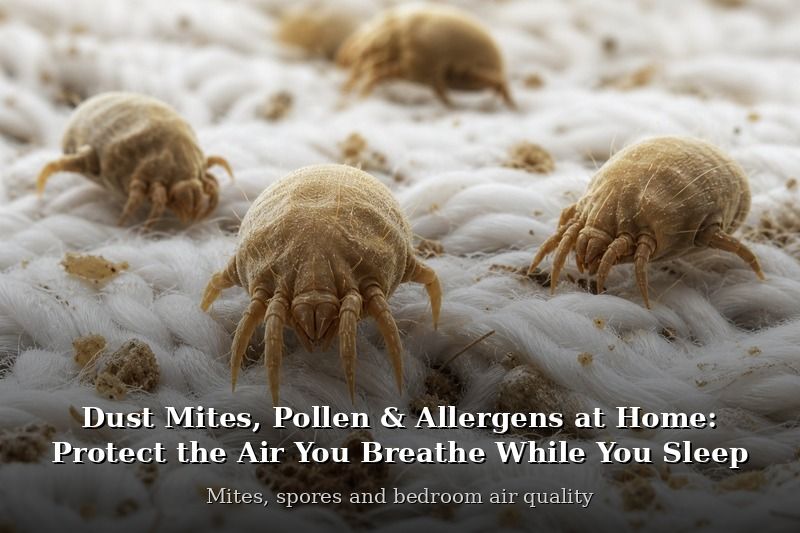
Dust Mites, Pollen and Allergens at Home: How to Protect the Air You Breathe While You Sleep
Dust mites, pollen, pet dander and mould fill the air at home, especially in the bedroom. What they are, why night is the most critical time, and how to reduce them.
Updated: • Reading: ~7 min
Allergies start at home: often in the bedroom
Every spring, millions of people deal with a runny nose, red eyes, sneezing and breathing difficulties. The most obvious cause seems to be the pollen outside the window, yet many keep having symptoms indoors too, at night, even when pollen levels are low.
The reason is simple: indoor air is full of allergens. Dust mites, pet dander, mould spores and cockroach fragments are present in almost every home, and they are responsible for a huge share of allergies and asthma attacks, regardless of the season.
The bedroom is the most critical environment. That is where we spend on average 7-8 hours every night, breathing continuously and deeply, often with our face a few centimetres from the mattress, one of the most allergen-rich ecosystems in the whole house.
The main indoor allergens: what they are and where they hide
Dust mites
Microscopic arachnids that feed on dead skin cells and thrive in warm, humid environments, in mattresses, pillows, duvets, rugs and sofas. Allergies are caused not by the mites but by their droppings and body fragments, which dry into fine dust suspended in the air. According to the WHO they are the most common cause of perennial allergy in the world.
Pollen
Produced by trees, grasses and flowers, it enters through windows, doors, clothes and hair, settles on surfaces and textiles and returns to the air whenever we move. In Italy pollen seasons have lengthened, with peaks from February to October.
Pet dander and animal allergens
The real problem is not the fur but the dander: microscopic, very light fragments of dry skin that stay suspended for hours. Cat dander is particularly allergenic and can persist for months, even after the animal no longer lives in the home.
Mould spores
As we explain in our article on mould, fungal spores are a powerful allergen: they thrive in damp environments and can cause rhinitis, asthma and skin reactions, all year round with peaks in autumn.
Other lesser-known allergens
Cockroach fragments (common in older buildings and city centres) and damp mould that develops in air-conditioning ducts when they are not cleaned regularly.
Allergies and asthma: when the air at home makes you ill
Chronic exposure to indoor allergens can cause or worsen a range of health conditions. The most common are:
- Allergic rhinitis: runny nose, congestion, frequent sneezing, itchy eyes. Often mistaken for a chronic cold.
- Bronchial asthma: wheezing, chest tightness, breathing difficulties, especially at night or early in the morning.
- Atopic dermatitis: itching, redness and dry skin, often worsened by dust mites.
- Allergic conjunctivitis: red, watery and irritated eyes.
- Sleep disturbances: a blocked nose, laboured breathing and night-time waking undermine rest, affecting concentration, mood and general health.
In Italy it is estimated that around 20-25% of the population suffers from allergic rhinitis, and that a significant share of these cases is triggered or worsened by allergens present at home.
Why the bedroom is the most critical environment
We spend a third of our life in the bedroom. During sleep the body is in a phase of deep recovery: the immune system works intensely and the airways are particularly vulnerable.
An adult's mattress can host between 100,000 and 10 million dust mites. At night the body's movements put them back into circulation, and they are inhaled just a few centimetres away.
This is why people with a dust mite allergy often wake up with a blocked nose, puffy eyes and a dry cough, symptoms that improve during the day, away from the bed. Reducing allergens in the bedroom air means protecting the 7-8 most vulnerable hours of the day.
How to reduce allergens in the bedroom
There are practical measures that help limit the presence of allergens:
- Wash sheets and pillowcases at 60°C at least once a week (the temperature needed to kill dust mites)
- Use anti-allergy mattress and pillow covers with a barrier fabric
- Keep the relative humidity in the room below 50% (below this threshold dust mites struggle to survive)
- Avoid rugs and carpet in the bedroom
- Do not let pets sleep on the bed
- Air the room during low-pollen hours (before 8 am and after 8 pm)
These measures are useful, but they have a limit: they do not remove the allergens already in the air. This is why active air purification is the most effective measure for people with allergies.
 The solution: Austin Air Bedroom Machine®

The Austin Air Bedroom Machine® was designed specifically for night-time use in the bedroom, with technical features intended to offer maximum protection in the hours when we are most vulnerable.
 Medical-grade HEPA and activated carbon
At the heart of the system is a medical-grade HEPA filter of 60 square feet (about 5.6 m²) able to capture 99.97% of particles down to 0.3 microns and 99% down to 0.1 microns: dust mites, spores, pollen, pet dander and any other airborne allergen. Added to this is a layer of activated carbon and zeolite to remove gases, odours and volatile organic compounds.
HEGA filter: military technology for your bedroom
The Bedroom Machine includes the HEGA filter (High Efficiency Gas Adsorption), a carbon cloth developed by the British Armed Forces. It is the same material used in military protective masks against chemical and biological agents. Austin Air is one of the very few manufacturers to integrate it into a portable home air purifier.
Quiet operation for undisturbed sleep
Unlike many purifiers that become noisy at higher speeds, the Bedroom Machine is designed to run quietly even at maximum power, so you can keep it on all night without disturbing sleep.
Built to last
The painted steel housing, filters lasting up to 5 years and long-life motor make the Bedroom Machine a long-term investment in your respiratory health.
Conclusion: sleeping well starts with the air you breathe
Allergies are not just a seasonal nuisance. For those sensitised to dust mites, pollen or pets, every night in the bedroom can become prolonged exposure to the allergens that trigger symptoms.
Protecting the bedroom air with a high-efficiency purifier is the most concrete and immediate measure you can take to improve the quality of your sleep and reduce allergy symptoms.
Discover the Austin Air Bedroom Machine® on high-techmarket.it, authorized Austin Air importer for Italy.
Useful links
- Austin Air Bedroom Machine® product page
 Purifier buying guide
 Asthma and air quality: the clinical studies
- Mould at home: risks and protection
 Compare the Austin Air models
 Air changes calculator
 All Austin Air purifiers
 Contact us
Note: air purifiers are not medical devices and do not replace treatments or medical advice. Performance may vary depending on use, environment and the substances present.
Sources: WHO, House Dust Mites; SIAAIC, prevalence of allergic diseases in Italy; EPA, Residential Air Cleaners: A Technical Summary (3rd ed.); EAACI, Allergic Rhinitis Guidelines.
Posted in:
Air Quality Blog
Related posts
-
 Asthma and Indoor Air Quality: What Science Says and How to Protect Yourself
Asthma affects over 3 million people in Italy and often worsens at night, when exposure to bedroom allergens is...Read more
-
 Ten independent clinical trials on Austin Air: what they show
Eight published studies and two in progress, conducted by eight independent research institutions on asthma,...Read more
-
Air Purifiers: Complete Guide and How to Choose the Right One
How to choose the right air purifier: HEPA and carbon filters, sizing, noise, running costs and maintenance....Read more
-
Austin Air announces the launch of the Immunity Machine, its most advanced air purifier.
Austin Air introduces the Immunity Machine, its most advanced air purifier: 8-phase filtration with medical-grade...Read more
-
MCS and Air Purification: A Guide to More Livable Spaces
A practical guide to air purification for people with MCS and chemical sensitivity: how to choose the right purifier,...Read more
Leave a comment